

No products in the cart.
Return To Shop Safety Boots vs. Regular Boots: A Technical Breakdown of Construction and Engineering Standards
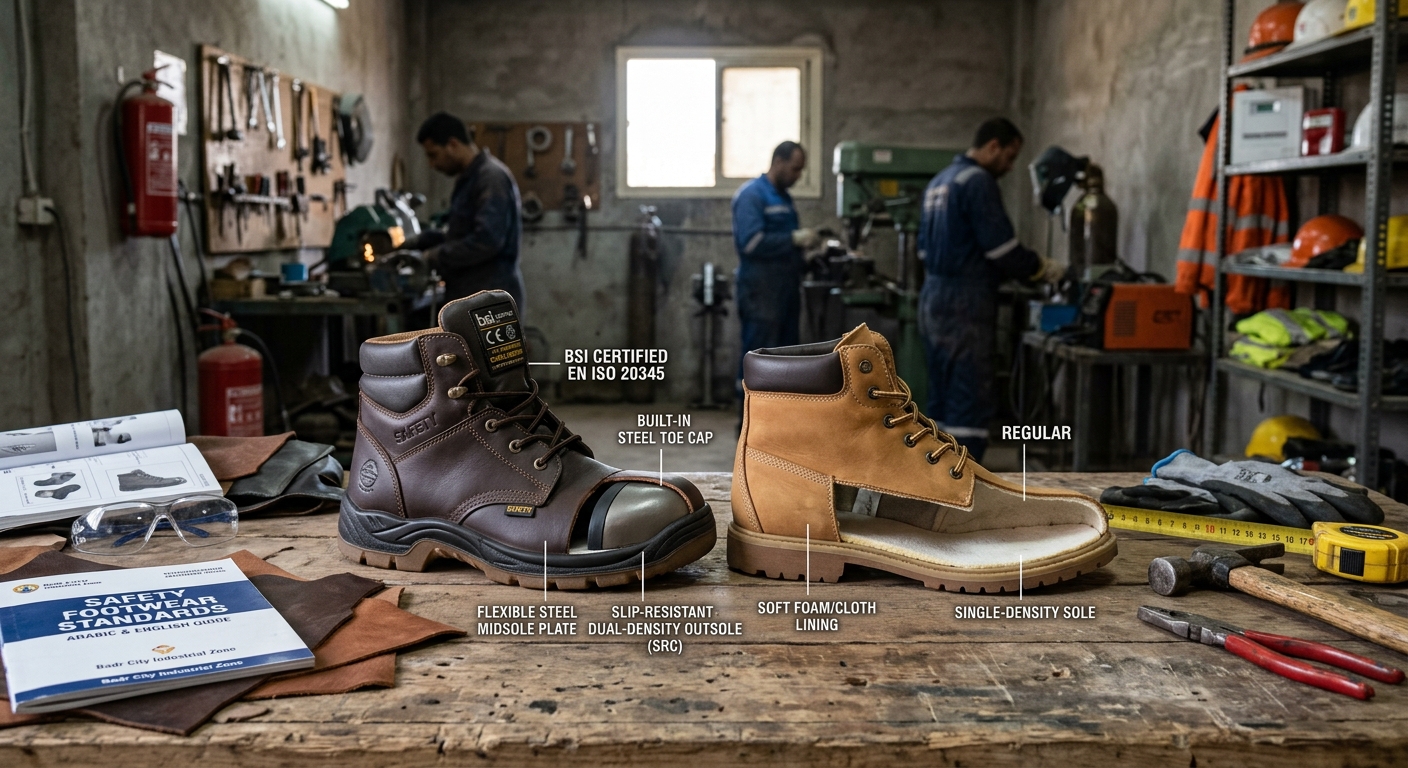 Safety Boots vs. Regular Boots: A Technical Breakdown of Construction and Engineering Standards
understanding of structural engineering, material science, and safety compliance. The distinction between a certified safety boot and a regular boot lies not in exterior aesthetics, but in internal component architecture, mechanical resistance, and performance under standardized test loads.
1. Structural Architecture and Material Composition
Regular Boots: Feature a lightweight thermoplastic counter or structured canvas reinforcement designed solely to maintain toe-box shape. They offer zero structural integrity against external impacts.
Safety Boots: Integrate an engineered protective cap rated to withstand an impact energy of 200 Joules (J) and a static compression load of at least 15 Kilonewtons (kN). Material variations include:
Steel Toe Caps: Provide maximum structural resistance against extreme crushing force within high-risk industrial environments.
Composite / Non-Metallic Caps: Utilize fiberglass, carbon fiber, or high-density polymers. They offer thermal insulation, weight reduction, and non-magnetic properties suitable for metal-detector-restricted areas.
B. Midsole and Penetration Resistance
Regular Boots: Constructed with basic EVA or single-density rubber outsoles. Sharp objects like nails or metal shavings can easily puncture through to the foot under normal body weight.
Safety Boots: Incorporate a dedicated anti-punction midsole plate made of flexible stainless steel or woven high-tenacity Aramid (Kevlar) fabrics. These plates resist puncture forces up to a minimum of 1,100 Newtons (N) according to standard pin-penetration protocols.
C. Outsole Chemistry and Tread Dynamics
Regular Boots: Designed for general surface traction and ambient weather conditions. Exposure to industrial solvents or heat causes rapid degradation, swelling, or loss of tread adhesion.
Safety Boots: Outsoles are pressure-molded using Dual-Density Polyurethane (PU/TPU) or Nitrile Rubber compound engineered for specific physical-chemical resistances:
Chemical/Oil Resistance: Prevents material degradation upon contact with hydrocarbons and industrial fluids.
Slip Resistance (SRC Standard): Tested for coefficient of friction on ceramic tile coated with sodium lauryl sulfate and steel floors with glycerol.
Heat Resistance (HRO Rating): Capable of withstanding direct contact with hot surfaces up to 300°C for 60 seconds without melting or structural failure.
2. Electrical and Environmental Performance Attributes
| Operational Feature | Regular Footwear | Certified Safety Footwear |
|---|---|---|
| Electrical Hazard Protection (EH) | Non-rated (Conductive when moist) | Insulates against up to 18,000V at 60Hz for 1 minute under dry conditions |
| Electrostatic Discharge (ESD) | Static charge accumulates continuously | Controlled surface resistance (105 to 109 Ohms) to safely dissipate static electricity |
| Water Permeability | Water-resistant surface coating | Full waterproof membrane assembly with vapor-permeable lining |
3. International Standards and Scientific Specifications
Selecting field-compliant foot protection requires verifying compliance markings against established international standards:
EN ISO 20345:2022 (European Standard):
Defines mandatory and optional requirements for safety footwear.
Key Classifications: S1P (Toe protection + Antistatic + Puncture resistance), S3 (S1P + Water penetration resistance), S7 (Updated 2022 standard for maximum protection and advanced waterproofing).
ASTM F2413-18 (American Society for Testing and Materials):
Outlines minimum performance requirements for protective safety footwear.
Standard Classifications: I/75 (Impact rating), C/75 (Compression rating), PR (Puncture resistance), EH (Electrical hazard resistance).
OSHA Standard 29 CFR 1910.136:
Mandates that employers ensure affected employees wear protective footwear when working in areas where there is a danger of foot injuries due to falling or rolling objects, or objects piercing the sole.
4. Technical Inspection Checklist for Field Engineers
To maintain site safety compliance:
Tag Verification: Inspect the tongue label for official standardization codes (EN ISO 20345 or ASTM F2413).
Structural Integrity: Check the flex zone of the outsole for micro-tears and verify that upper-to-outsole bonding shows no delamination.
Decommissioning Threshold: Replace safety boots immediately following any heavy impact event, even if no external damage is visible. Internal structural deformation of the cap or midsole compromises future impact attenuation.
Industrial Safety and Supply Context
Sourcing compliant safety boots is an essential component of a comprehensive industrial safety equipment supply strategy and Personal Protective Equipment (PPE) management program. Occupational foot protection works hand-in-hand with broader facility safety protocols, including fire protection systems, fire suppression equipment, and fire alarm installations, ensuring that technical personnel and emergency response teams remain fully protected against multi-hazard operational risks.
Breakdown of Construction and Engineering Standards
Certified Safety Footwear by Firematic – Guaranteed Protection & Compliance
At Firematic, we understand that workforce safety begins from the ground up. That is why we offer a comprehensive and field-proven selection of Industrial Safety Boots that fully comply with top international and local standard specifications (including EN ISO 20345 and ASTM).
Our footwear solutions are guaranteed, rigorously tested, and built to withstand extreme job site conditions, delivering uncompromised protection against mechanical hazards, electrical risks, and dangerous slips.
Explore our full range and select the right safety boots for your team today: Click here to visit the Firematic Safety Footwear Products Page

Add comment